For refugees to the US, discrimination can make healthcare harder to get
Pusulam brief
It can be hard to pin down why an experience at the doctor's office felt off. A boy and the sea/E+ via Getty Images Newly arrived refugees resettling in the United States face ending one long journey and embarking on another as they begin their new life here.
The development is worth tracking because it may create practical public benefit or inform similar work.
It can be hard to pin down why an experience at the doctor's office felt off. A boy and the sea/E+ via Getty Images Newly arrived refugees resettling in the United States face ending one long journey and embarking on another as they begin their new life here. But even after years of displacement, people who came to the U.S. as refugees still face significant obstacles to getting the healthcare they need. As a social work scholar who studies refugee resettlement, mental health and access to care, I know well that many refugees experienced serious trauma before migrating. Adjusting to a new country can also be highly stressful, between language barriers, money woes and immigration-related bur…
Why good news?
The story points to a concrete improvement, protection effort, discovery, or public benefit.
Why it matters?
The development is worth tracking because it may create practical public benefit or inform similar work.
Read in Pusulam
Full text
It can be hard to pin down why an experience at the doctor's office felt off. A boy and the sea/E+ via Getty Images Newly arrived refugees resettling in the United States face ending one long journey and embarking on another as they begin their new life here. S.
as refugees still face significant obstacles to getting the healthcare they need. As a social work scholar who studies refugee resettlement , mental health and access to care, I know well that many refugees experienced serious trauma before migrating. Adjusting to a new country can also be highly stressful, between language barriers, money woes and immigration-related bureaucracy.
S. medical system is notoriously difficult to navigate. All of these factors can and do hamper healthcare access .
But a growing body of research, including my own, points to a difficulty that gets far less attention: how refugees feel they are treated in everyday American life. Beyond language barriers and bureaucratic challenges Refugees enter the country through a formal resettlement system . They complete required medical examinations before arrival, are generally offered a fuller health screening soon after and are eligible for health insurance coverage for up to eight months after they arrive .
S. health system from day one. S.
– about half said they face at least one obstacle to getting medical care. The survey asks whether factors like cost, a lack of transportation, a language barrier, not knowing where to go or difficulty getting an appointment prevented people from getting the medical care they needed. , they have been treated unfairly because of their race, language or accent, culture or religion – on the street, at work, in housing, in interactions with the police and in healthcare.
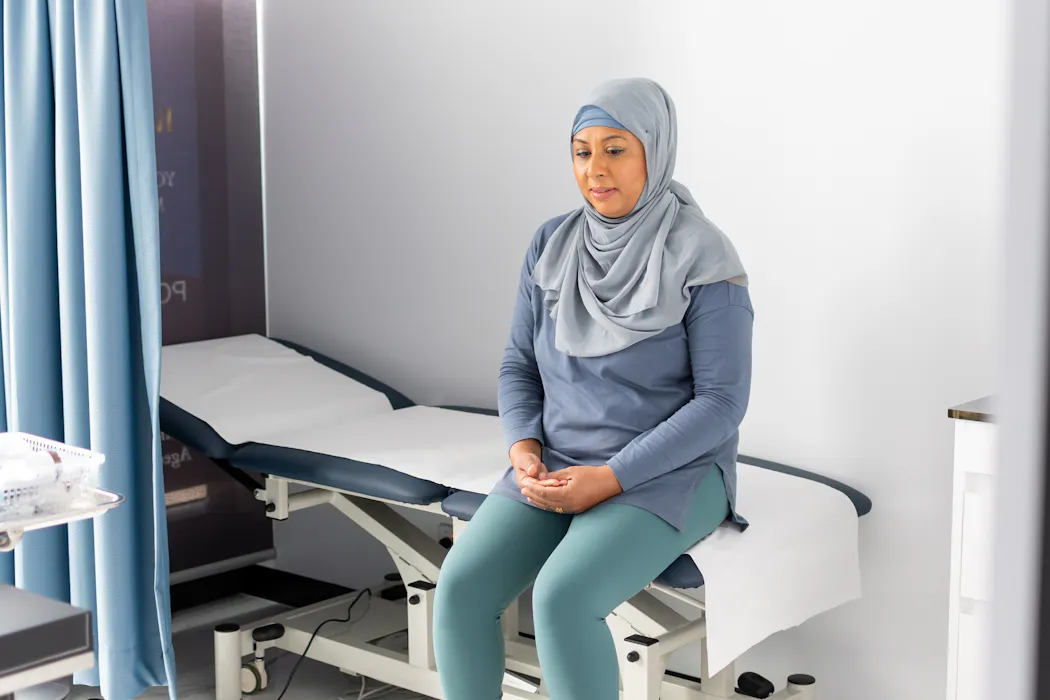
Many refugees report discrimination as a reason they struggle to access healthcare. FatCamera/E+ via Getty Images Previous research suggests that experiencing discrimination in healthcare can weaken trust in institutions and make people less likely to seek care in the future. My colleague Gashaye Melaku Tefera , a social work scholar at Florida State University, and I wanted to know whether discrimination in other parts of daily life could also made it harder for refugees to get the healthcare they need.
In a study published in 2025, we explored the responses of about 4,500 adults who filled out the survey in 2020, 2021 and 2022 . We found a substantial difference between refugees who didn’t report experiencing discrimination versus those who did. In the former group, 39% identified at least one barrier to getting healthcare.
In the latter group, however, that number was higher – 66%. S. In fact, reported discrimination was more strongly linked to trouble getting healthcare than limited English or financial hardship.
Unfair treatment in healthcare and daily life Because the survey captures each person’s circumstances at a single point in time, it doesn’t prove that these experiences caused the barriers people reported. Still, the pattern is consistent with a wider body of research. , 1 in 4 who had received healthcare here said a provider had treated them unfairly .
Separately, more than 1 in 5 participants in that survey said they had skipped or postponed care in the previous year. The survey didn’t connect those delays to unfair treatment, but it shows that both are common when immigrants seek healthcare. These experiences are not confined to clinics.
S. in at least one everyday setting – a store or restaurant, an interaction with police, or when buying or renting a home. S.
healthcare system is no small feat for Americans, let alone for newcomers unfamiliar with the culture. Other research links unfair treatment in healthcare settings to mistrust and going without needed care. After unfair treatment by an employer, a landlord or a police officer, it may be harder to trust that a clinic would be different.
In my research, I’ve found that this connection remained strong even among older refugees, for whom health status might seem like a more obvious explanation for difficulty getting care. In a separate analysis of the Annual Survey of Refugees focusing on respondents age 50 and older, even those who marked that they were “unsure” whether they had experienced discrimination reported nearly the same rise in healthcare barriers as those who answered “yes,” we found. ” Unfair treatment is not always easy to name.
A person may leave a healthcare visit knowing something felt wrong without knowing whether an accent, clothing, country of origin or refugee status shaped the response. Such experiences can be subtle. An unequal burden When a refugee woman of color enters a health clinic, her gender, ethnicity, accent and the fact that she is a refugee all shape how other people see and respond to her .
Assumptions linked to these identities can shape what others assume she knows, how seriously they take her pain and even whether they see her as someone who belongs. Unfair treatment in healthcare is not spread evenly, either. In the 2023 survey discussed above, 38% of Black immigrant adults who had received care reported unfair treatment by a provider – more than twice the share of white immigrant adults, at 18%.
Our study of the 2020-2022 Annual Survey of Refugees found the same imbalance. When reported discrimination was high, Black women faced nearly twice as many difficulties getting healthcare as white men. Middle Eastern or North African women faced about 85% more than white men, and Asian women about 75% more.
S. are far more likely than white adults to report unfair treatment from a healthcare provider – and Black women report it more often than Black men. Across these studies, a larger pattern emerges: Having health insurance or being eligible for care does not guarantee that it is truly within reach.
The challenges people face in getting the healthcare they need reflect not only what services exist, but the unfair treatment they report when they try to use those services. They also shed light on whether people believe they can expect fair treatment when they walk through the clinic door. Hyojin Im does not work for, consult, own shares in or receive funding from any company or organization that would benefit from this article, and has disclosed no relevant affiliations beyond their academic appointment.
Do you think this development will have a positive impact?
Pusulam AI
Chat with this story
Ask for a summary, why it matters, or missing context.
Source
This story is available in-app because its republishing terms allow it. The original source is always linked below.
Read at source →