Eclipse to be witnessed by tens of millions across western Europe as enthusiasts gather along path of totality Nordic correspondent In Iceland, people have flocked by air, land and sea to watch the total solar eclipse – the country’s first in 72 years. Continue reading...
Why good news?
The story points to a concrete improvement, protection effort, discovery, or public benefit.
Why it matters?
The development is worth tracking because it may create practical public benefit or inform similar work.
Event expected to hit solar power just as fifth heatwave of summer increases use of air conditioning and fans Great Britain faces a shortfall of electricity supplies on Wednesday evening as the near total solar eclipse is expected to wipe out solar power generation. The government’s electricity grid operator raised an official alarm that there is currently not enough power generation expected as the moon blocks up to 95% of the sun over parts of the country, the most dramatic eclipse visible in Great Britain since 1999.
Why good news?
The story points to a concrete improvement, protection effort, discovery, or public benefit.
Why it matters?
The development is worth tracking because it may create practical public benefit or inform similar work.
Rooms in Icelandic capital Reykjavík cost double usual rate, with Spain also enjoying strong bookings Europe’s total solar eclipse: the best place to see it Hotel prices have surged in key European cities, as hundreds of thousands of tourists flock to see the first total eclipse visible from the continent this century. Iceland’s capital Reykjavík has seen one of the biggest jumps in hotel room prices, being one of the few accessible locations to see the full eclipse before evening light descends on Wednesday.
Why good news?
The story points to a concrete improvement, protection effort, discovery, or public benefit.
Why it matters?
The development is worth tracking because it may create practical public benefit or inform similar work.
Moon is due to pass directly between Earth and sun on Wednesday 12 August. Here’s all you need to know On Wednesday evening, millions of Europeans will experience a celestial treat: a solar eclipse.
Why good news?
The story points to a concrete improvement, protection effort, discovery, or public benefit.
Why it matters?
The development is worth tracking because it may create practical public benefit or inform similar work.
Some online shoppers may have left it too late to order – but you can view partial eclipse indirectly without specs A frantic rush is on across the UK to find the right kind of protective eyewear ahead of Wednesday’s partial solar eclipse. High street stores are running out of eclipse glasses and online shoppers who track down a pair are being told they may not reach them until the end of the week.
Why good news?
The story points to a concrete improvement, protection effort, discovery, or public benefit.
Why it matters?
The development is worth tracking because it may create practical public benefit or inform similar work.
Firm urges customers to avoid running washing machines and dishwashers between 6pm and 8pm on Wednesday Where in the UK will get the best view of the solar eclipse? Business live – latest updates Great Britain’s biggest household energy supplier is calling on its customers to use less electricity this week during the deepest solar eclipse in almost 30 years.
Why good news?
The story points to a concrete improvement, protection effort, discovery, or public benefit.
Why it matters?
The development is worth tracking because it may create practical public benefit or inform similar work.
Exclusive: Report warns of ‘ticking timebomb’ as cost of higher education ‘falls overwhelmingly on the individual’ The government is piling mountains of debt and higher tax rates on young people heading to university, according to analysis into the “ticking timebomb” of costs faced by future students. Hundreds of thousands of sixth formers will receive their A-level results on Thursday, with many expecting to continue on to higher education courses.
Why good news?
The story points to a concrete improvement, protection effort, discovery, or public benefit.
Why it matters?
The development is worth tracking because it may create practical public benefit or inform similar work.
Rukhsar Ahmed was recently elected an MP in Pakistan while on bail over alleged child rape in 1990s Manchester A grooming gang suspect released on bail in the UK and then re-elected as an MP in Pakistan has reportedly declined to say when he would return to face rape charges. The Guardian disclosed that Rukhsar Ahmed, a former Pakistan state minister, was arrested at Manchester airport in July 2024 on suspicion of raping and trafficking at least two underage girls from care homes in the city’s Rusholme area during the 1990s.
Why good news?
The story points to a concrete improvement, protection effort, discovery, or public benefit.
Why it matters?
The development is worth tracking because it may create practical public benefit or inform similar work.
Exclusive: Lack of funds left British museums unable pay eight-figure sum for collection, which went to Abu Dhabi institution One of the most important collections of UK Jurassic fossils ever compiled has been sold to a museum in Abu Dhabi, the Guardian can reveal, in what British experts have described as a loss for the nation. The collection, which was amassed by a private fossil collector, consisted of 318 specimens, including ichthyosaurs, fish and crustaceans among other creatures, some of which could be new species.
Why good news?
The story points to a concrete improvement, protection effort, discovery, or public benefit.
Why it matters?
The development is worth tracking because it may create practical public benefit or inform similar work.
When, where and how to get the optimal view of the first solar eclipse to be visible across the country this century For the first time this century, people across the UK will be able to see an almost total solar eclipse in the evening sky on Wednesday. A solar eclipse occurs when the moon moves between the sun and the Earth, blocking the sun’s light either partially or fully.
Why good news?
The story points to a concrete improvement, protection effort, discovery, or public benefit.
Why it matters?
The development is worth tracking because it may create practical public benefit or inform similar work.
Scotland’s former first minister says she will not visit Murrell in prison, where he is serving five-year sentence for embezzling SNP funds Nicola Surgeon has said she will not visit her estranged husband, Peter Murrell, in prison, has stopped speaking to him and views herself as a “mug” for worrying about his wellbeing and mental health earlier this year. During a podcast recording at the Edinburgh festival fringe, Scotland’s former first minister said Murrell had lied to her until the day he pleaded guilty to embezzling more than £400,000 from the Scottish National party.
Why good news?
The story points to a concrete improvement, protection effort, discovery, or public benefit.
Why it matters?
The development is worth tracking because it may create practical public benefit or inform similar work.
Exclusive: Seven in 10 survey respondents expect services to be reduced or shut, while more than half anticipate job losses Millions of adults and children in England face being forced to wait longer for mental health care, with more than two-thirds of NHS providers planning to cut services and half expected to axe jobs, the Guardian can reveal. With mental health services already under extraordinary pressure amid soaring demand for support, experts warned the proposed cuts – drawn up by trusts to plug holes in their finances – would also have “significant” consequences for the wider NHS, the economy and public services.
Why good news?
The story points to a concrete improvement, protection effort, discovery, or public benefit.
Why it matters?
The development is worth tracking because it may create practical public benefit or inform similar work.
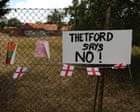
Homes of people believed to be asylum seekers allegedly attacked during two nights of violence in Thetford Two men have been arrested after police were injured as they intervened to protect men believed to be asylum seekers from angry mobs trying to break into their homes. The arrests followed two nights of unrest in Thetford, Norfolk, involving more than 100 people protesting against plans to house asylum seekers in former military barracks near the market town.
Why good news?
The story points to a concrete improvement, protection effort, discovery, or public benefit.
Why it matters?
The development is worth tracking because it may create practical public benefit or inform similar work.
GMB says that as a top-rated ethical company, UK’s largest energy firm should welcome involvement of unions Workers are pushing for union recognition at the UK’s largest energy company, Octopus Energy, known as a progressive organisation with a focus on renewable energy. The GMB union is planning to submit a formal proposal for voluntary recognition at the London-based company and says Octopus, as a top rated ethical business, should welcome the involvement of trade unions.
Why good news?
The story points to a concrete improvement, protection effort, discovery, or public benefit.
Why it matters?
The development is worth tracking because it may create practical public benefit or inform similar work.
As another summer of extreme heat rumbles on, warnings about excess deaths, ageing infrastructure and potential food shortages are growing louder. So how well prepared is the UK to cope, both now and in the years ahead?
Why good news?
The story points to a concrete improvement, protection effort, discovery, or public benefit.
Why it matters?
The development is worth tracking because it may create practical public benefit or inform similar work.
Programme aiming to stop people turning to terrorism sees 39% rise in referrals in year to September 2025 – the highest number on record A record number of people have been referred to the government’s anti-terror programme, with a 39% rise over the last year, including a 20% rise in referrals for extreme rightwing ideology, according to official data released on Thursday. A total of 10,293 referrals – up from 7,408 – were made to the Prevent programme in the year to September 2025, which is the highest number since records began 11 years ago.
Why good news?
The story points to a concrete improvement, protection effort, discovery, or public benefit.
Why it matters?
The development is worth tracking because it may create practical public benefit or inform similar work.
Ex-Tesco boss known as ‘Drastic Dave’ for his cost-cutting zeal pledges more of the same at flagging Guinness owner Shares in Diageo have bounced after the Guinness owner’s chief executive, “Drastic Dave” Lewis, passed the first big test of his plan to revive the flagging fortunes of the UK-based drinks company. Lewis, a former Tesco boss known in the City for his cost-cutting zeal, promised to deliver $1bn of savings over two years through a “significant” restructuring aimed at making the company more agile.
Why good news?
The story points to a concrete improvement, protection effort, discovery, or public benefit.
Why it matters?
The development is worth tracking because it may create practical public benefit or inform similar work.
Reform say employers would be held responsible even if they were unaware of the worker’s immigration status Health secretary Yvette Cooper has urged the Conservatives to “think again” after Kemi Badenoch appointed a former antisemite as a party adviser. It came after Joshua Bonehill-Paine, who had been selected by the Tories to contest a council election next year, withdrew his candidacy.
Why good news?
The story points to a concrete improvement, protection effort, discovery, or public benefit.
Why it matters?
The development is worth tracking because it may create practical public benefit or inform similar work.
Thames Valley chief says he may join Police Federation in court if Jessie Cole and Albert Bowers are freed from prison The chief constable of Thames Valley police has said he will consider joining legal action against the government if it fails to block the early release of two of PC Andrew Harper’s killers. The Police Federation is contemplating going to court in its attempts to keep Jessie Cole and Albert Bowers in prison.
Why good news?
The story points to a concrete improvement, protection effort, discovery, or public benefit.
Why it matters?
The development is worth tracking because it may create practical public benefit or inform similar work.
Exclusive: New health secretary promises root-and-branch reform after damning maternity scandals Women should not feel pressurised into experiencing an “ideal birth”, the new health secretary, Yvette Cooper, has said, promising a root-and-branch reform of standards after several damning maternity scandals. Cooper, who returns to the department 27 years after she was the minister for public health under Tony Blair, said maternity and child health would be a major focus in the role, where she will also be expected to implement significant reforms to social care.
Why good news?
The story points to a concrete improvement, protection effort, discovery, or public benefit.
Why it matters?
The development is worth tracking because it may create practical public benefit or inform similar work.
Louise Haigh says taxpayer money must benefit local communities amid backlash from environmental groups Ministers will scrap the requirement for companies to prove their green and progressive values before they are awarded government contracts, and instead ask firms to prove they will help young people back into work. As part of a government push to reduce the number of people not in education, employment or training (Neets) in the UK and boost regional growth, public sector buyers will double the consideration they give to whether companies will get more people into jobs, rather than if they can show they are improving social and environmental wellbeing.
Why good news?
The story points to a concrete improvement, protection effort, discovery, or public benefit.
Why it matters?
The development is worth tracking because it may create practical public benefit or inform similar work.
A Guardian investigation finds irrigation canals polluted with microplastics in Turkey, a major destination for UK waste • ‘Nobody cares’: Turkish farmers bear the burden of UK’s plastic waste problem High levels of microplastics and other plastic contamination have been discovered in a waterway close to a major recycling hub in Turkey supplied with plastic waste by British companies. The polluted waterway, which floods into agricultural fields after heavy rain, feeds into a larger canal used for irrigating crops on the Çukurova plain, in the city of Adana, in the south of the country.
Why good news?
The story points to a concrete improvement, protection effort, discovery, or public benefit.
Why it matters?
The development is worth tracking because it may create practical public benefit or inform similar work.
Justice secretary says ministers would have liked to block more but doing so would cause prison system to ‘break’ UK politics live – latest updates About 1,000 fewer prisoners will be released early after Andy Burnham’s intervention to exclude those convicted of rape, serious child sexual offences and grooming from the scheme. The justice secretary, Alex Norris, said 5,000 prisoners would be released over 10 months from October in England and Wales, down from the government’s original plan for 6,000 from September.
Why good news?
The story points to a concrete improvement, protection effort, discovery, or public benefit.
Why it matters?
The development is worth tracking because it may create practical public benefit or inform similar work.
Survey reveals medics were called ‘monkeys’ and ‘dirty foreigners’, and patients refused to be seen by black or Asian staff NHS radiographers are experiencing racist abuse by patients, who have called them “monkeys” and refused to be seen by black and Asian staff, according to a report. A survey of 381 members of the Society of Radiographers revealed a “noticeable” rise in instances of overt racism experienced and witnessed by radiographers across the health service over the past 18 months.
Why good news?
The story points to a concrete improvement, protection effort, discovery, or public benefit.
Why it matters?
The development is worth tracking because it may create practical public benefit or inform similar work.
Body providing care in east London and Bedfordshire accused of ‘unfathomable and unacceptable’ move An NHS mental health trust plans to cut a wide range of its services and axe hundreds of jobs to close a £25m hole in its finances. The move by the East London foundation trust (ELFT) and the scale of potential cuts involved have been called unfathomable given demand for NHS mental health support is rising rapidly.
Why good news?
The story points to a concrete improvement, protection effort, discovery, or public benefit.
Why it matters?
The development is worth tracking because it may create practical public benefit or inform similar work.
The new London and South East University Group will be UK’s third largest higher education institution The UK’s first “super-university”, which will merge the universities of Greenwich and Kent, is set to launch in September. The new London and South East University Group, to be known as the LASEUG, will have more than 50,000 students on four campuses across London, Medway and Kent, making it the third largest higher education institution in the UK.
Why good news?
The story points to a concrete improvement, protection effort, discovery, or public benefit.
Why it matters?
The development is worth tracking because it may create practical public benefit or inform similar work.
New Order and Simon Armitage among more than 100 signatories to criticise ‘foolish and shortsighted’ cuts More than 100 artists, writers and scientists have called for the UK government to save the “world’s clearest eyes on the sky”, after funding for thenetwork of radio telescopes at Jodrell Bank Observatory was slashed. New Order, the Canadian astronaut Chris Hadfield and the poet laureate, Simon Armitage, are among those calling on the new prime minister, Andy Burnham, to save the deep space observatory which includes the Grade I-listed Lovell telescope, prized by astronomers who study galaxies, star formation and planets beyond the solar system.
Why good news?
The story points to a concrete improvement, protection effort, discovery, or public benefit.
Why it matters?
The development is worth tracking because it may create practical public benefit or inform similar work.
Farms and rooftop panels contribute 14. 4% to the grid – and figures reveal a surge in new installations Solar energy supplied more power to Great Britain’s grid in July than in any previous month as households turned to rooftop panels to cut their energy bills.
Why good news?
The story points to a concrete improvement, protection effort, discovery, or public benefit.
Why it matters?
The development is worth tracking because it may create practical public benefit or inform similar work.
Review goes down to the wire after ministers speak with victims’ representatives and support services Andy Burnham is focused on preventing the release of child sexual abuse perpetrators as part of the government’s early release scheme, as urgent talks on which serious criminals could be exempted go down to the wire. Government ministers are understood to have 24 hours to assess which criminals can be released early to free up prison space, with every exemption weighed up against the threat of the criminal justice system’s collapse.
Why good news?
The story points to a concrete improvement, protection effort, discovery, or public benefit.
Why it matters?
The development is worth tracking because it may create practical public benefit or inform similar work.
New education secretary says it is ‘false trade-off’ by critics to suggest schools cannot pursue academic excellence alongside technical skills Lucy Powell has said she wants to be an ambitious “tiger mum” for all young people, whatever their route through education, after the government was accused of dumbing down England’s schools with plans to create more vocational routes. The new education secretary said secondary pupils should be able to pursue academic excellence as well as high-quality vocational training, and it was a “false trade-off” to suggest schools could not provide both.
Why good news?
The story points to a concrete improvement, protection effort, discovery, or public benefit.
Why it matters?
The development is worth tracking because it may create practical public benefit or inform similar work.
Whey protein, a key infant formula ingredient, is in growing demand, partly linked to rising use of weight-loss drugs The rise of “proteinmaxxing” – a trend in which consumers try to eat as much protein as possible – could lead to higher prices for infant formula, experts warn. Whey protein, a key ingredient in infant formula, has surged in popularity over the past year as health professionals emphasise the benefits of protein.
Why good news?
The story points to a concrete improvement, protection effort, discovery, or public benefit.
Why it matters?
The development is worth tracking because it may create practical public benefit or inform similar work.
Laughter, disbelief and outrage over video appearing to show Saltburn player tricking umpire into giving batters out At the Saltburn over-60s ukulele club there was a unanimous reaction to news that the town’s cricket club were being compared to the Argentina football team: laughter. Then a spirited rendition of I Love to Boogie.
Why good news?
The story points to a concrete improvement, protection effort, discovery, or public benefit.
Why it matters?
The development is worth tracking because it may create practical public benefit or inform similar work.
Health Foundation paper argues health is an economic asset and improving it could generate £72bn for public finances Restoring the deteriorating health of the UK’s population to the level of 2014 would boost GDP by 2% and generate a £72bn dividend for the public finances, research suggests. A paper by the Health Foundation thinktank, published on Sunday, argues the nation’s health should be valued by policymakers as an economic asset.
Why good news?
The story points to a concrete improvement, protection effort, discovery, or public benefit.
Why it matters?
The development is worth tracking because it may create practical public benefit or inform similar work.
Move dealt ‘severe blow to Chinese companies’ confidence in investing in the UK’, says Ministry of Commerce China’s government has said it is “strongly dissatisfied” with the decision to nationalise British Steel this week, 15 months after the UK government stepped in to prevent the closure of its steelworks in Scunthorpe and the loss of 4,000 jobs. On Thursday, British Steel was brought under public ownership to protect “the future of steel production”, the government announced.
Why good news?
The story points to a concrete improvement, protection effort, discovery, or public benefit.
Why it matters?
The development is worth tracking because it may create practical public benefit or inform similar work.
Researchers find dance reduced depressive symptoms and social anxiety in young people in eight-week trial Salsa is one of the most popular dance forms, with hundreds of millions of followers worldwide. A mix of Caribbean, Spanish and African musical styles and rhythms, it is believed to offer many cognitive and physical benefits, such as improving cardiovascular health, muscle tone and posture.
Why good news?
The story points to a concrete improvement, protection effort, discovery, or public benefit.
Why it matters?
The development is worth tracking because it may create practical public benefit or inform similar work.
About 100,000 children across the country drink the high-caffeine beverages daily High-caffeine energy drinks “have no place in children’s hands” and will be banned from sale to under-16s in England from April next year under new laws designed to improve health outcomes in young people. About 100,000 children across the country currently drink high-caffeine energy drinks daily, with those in more deprived areas and households more likely to consume them, according to the government.
Why good news?
The story points to a concrete improvement, protection effort, discovery, or public benefit.
Why it matters?
The development is worth tracking because it may create practical public benefit or inform similar work.
Move raises questions over position of the head of the Maritime and Coastguard Agency UK politics live – latest updates Ministers have U-turned on plans to strip volunteer coastguard officers of their hourly pay after coming in for intense criticism over the plan. The announcement, made by the maritime minister in parliament on Thursday, was described as a huge win for coastguards many of whom had said they would reduce their hours or leave the service altogether if the government had pushed ahead.
Why good news?
The story points to a concrete improvement, protection effort, discovery, or public benefit.
Why it matters?
The development is worth tracking because it may create practical public benefit or inform similar work.
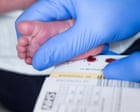
Campaigners hail ‘landmark moment’ in early detection and treatment of rare muscle-wasting disease Every baby born in England will be screened for a rare muscle-wasting disease, starting next year, the Department of Health and Social Care announced on Thursday. Campaigners said the “landmark moment” should lead to babies who were found to have spinal muscular atrophy (SMA) being treated early and thus growing up without any of its debilitating symptoms.
Why good news?
The story points to a concrete improvement, protection effort, discovery, or public benefit.
Why it matters?
The development is worth tracking because it may create practical public benefit or inform similar work.
Exclusive: Prof Evelyn Welch, vice-chancellor of Bristol University, believes her daughter’s success shows value of arts education One of Britain’s leading university vice-chancellors has described sweeping cuts to arts and humanities across the sector as “absolutely tragic”, citing her famous daughter as an example of the value of a creative arts education. Prof Evelyn Welch, the vice-chancellor of Bristol University and incoming chair of the Russell Group of research-intensive universities, is the mother of Florence Welch, the singer-songwriter from Florence + the Machine.
Why good news?
The story points to a concrete improvement, protection effort, discovery, or public benefit.
Why it matters?
The development is worth tracking because it may create practical public benefit or inform similar work.
Exclusive: Work and pensions secretary signals possible reform to welfare as ministers await key reviews Labour must stop “simply writing a cheque” for health and disability benefit claimants and will provide more job support instead, the work and pensions secretary has said. Pat McFadden said the government was preparing to launch a renewed effort at welfare reform with a focus on encouraging more people with health conditions to get into work and off benefits.
Why good news?
The story points to a concrete improvement, protection effort, discovery, or public benefit.
Why it matters?
The development is worth tracking because it may create practical public benefit or inform similar work.
Exclusive: Lewisham council’s move marks first step in Greens’ plan to create a corridor of sanctuary boroughs across London A Green-led London council is planning to ban its officials from working with the Home Office on immigration raids, after uncovering evidence suggesting government officials wanted to use environmental health data to target restaurant workers. Councillors on the Lewisham borough council are due to vote next week on a motion that would review its systems with a view to ending any cooperation with the government’s attempts to deport people without the right to remain in the UK.
Why good news?
The story points to a concrete improvement, protection effort, discovery, or public benefit.
Why it matters?
The development is worth tracking because it may create practical public benefit or inform similar work.
Commons health committee also recommends end to junk food advertising on billboards and public transport Fast food chains such as KFC should be stopped from opening near schools, and advertising for junk food on billboards and public transport should be banned to help curb obesity, MPs will say today. The Commons health committee will also urge ministers to stop giving in to food industry lobbying and get tough to tackle a problem that costs the UK £74bn a year and causes huge illness.
Why good news?
The story points to a concrete improvement, protection effort, discovery, or public benefit.
Why it matters?
The development is worth tracking because it may create practical public benefit or inform similar work.
Midnight to 6am block on some apps is latest stage of Labour’s bid to protect young people from online harms Sixteen and 17-year-olds are to be encouraged to observe a midnight social media curfew, in the latest stage of Labour’s bid “to protect the next generation” from online harms, including poor sleep caused by night-time scrolling. From next spring, Britain’s oldest children will be urged to refrain from using certain apps with a midnight to 6am block being switched on by default.
Why good news?
The story points to a concrete improvement, protection effort, discovery, or public benefit.
Why it matters?
The development is worth tracking because it may create practical public benefit or inform similar work.
Policy to create youth clubs and health centres aims to tackle surplus of school spaces created by falling pupil numbers Classrooms left empty by falling numbers of pupils could soon be converted into youth clubs or health centres, as part of a pilot scheme to be announced this week. In the pilot a group of local authorities in England will be given £3.
Why good news?
The story points to a concrete improvement, protection effort, discovery, or public benefit.
Why it matters?
The development is worth tracking because it may create practical public benefit or inform similar work.
Campaigners criticise C of E for failing to show moral leadership as one of country’s biggest landowners The Church of England has voted against plans to restore 30% of its land for nature, with campaigners criticising its failure to show moral leadership. The C of E owns about 42,500 hectares (105,000 acres) of land, making it one of England’s biggest landowners.
Why good news?
The story points to a concrete improvement, protection effort, discovery, or public benefit.
Why it matters?
The development is worth tracking because it may create practical public benefit or inform similar work.
Palaeontologists warn before auction at Sotheby’s in New York that super-rich collectors are harming research With its dagger-like teeth, bone-crushing bite and behemothic size, the fearsome Tyrannosaurus rex ruled western North America during the late Cretaceous period. Now its fossilised remains are about to dominate the auction house, with a price tag to terrify punters.
Why good news?
The story points to a concrete improvement, protection effort, discovery, or public benefit.
Why it matters?
The development is worth tracking because it may create practical public benefit or inform similar work.
Sperm counts are in decline worldwide, and testosterone levels are said to be plunging, but male infertility still carries a stigma. Prof Michael Carroll on what every man should know When we talk about infertility, the focus tends to be on the woman.
Why good news?
The story points to a concrete improvement, protection effort, discovery, or public benefit.
Why it matters?
The development is worth tracking because it may create practical public benefit or inform similar work.
Analysis of 12 indicators including asthma, obesity and vaccination finds child health is ‘national embarrassment’ Children in the UK will grow up to be one of the unhealthiest generations in decades, with child health outcomes having declined or stalled completely across all areas, a group of leading paediatricians has said. Reduced vaccination rates alongside rising hospital admissions for asthma and mental health disorders are all contributing factors to the UK’s record on children’s health, which should be seen as a “national embarrassment”, their analysis has found.
Why good news?
The story points to a concrete improvement, protection effort, discovery, or public benefit.
Why it matters?
The development is worth tracking because it may create practical public benefit or inform similar work.