Your personal paper

Pick your interests and we will tune the feed.

Personal feed: Science
ScienceBBC Science & Environment· Jun 9, 05:45 PM

Nasa has named the Artemis III crew - what is their mission?

NASA has announced the crew for Artemis III mission. This mission will help test critical systems needed for the planned Artemis V Moon landing in 2028.

Why good news?

A significant step toward humanity's return to the Moon. Represents progress in space technology, scientific discovery, and international collaboration. Critical systems will be tested for future lunar exploration.

Why it matters?

Lunar exploration drives technological innovation, scientific knowledge, and humanity's long-term goals for space exploration.

ScienceBBC Science & Environment· Jun 10, 05:21 AM

Women prepare for 'space jobs that don't exist yet'

Hundreds of women are attending the AeroWomen event to prepare for future career opportunities in aerospace and space industries. The program aims to equip women with training and mentorship for emerging roles that don't yet exist.

Why good news?

Preparing women early for high-potential fields like STEM and space technology supports gender equality and opens doors for future generations. The proactive educational approach encourages adaptation to industry changes before they occur.

Why it matters?

The aerospace and space industry is rapidly expanding; increasing women's participation broadens the talent pool and strengthens innovation. Early preparation programs reduce career barriers and promote diversity.

ScienceMIT News· Jun 8, 08:40 PM

MIT affiliates win 2026 Breakthrough, New Horizons prizes

An MIT faculty member and four alumni have been awarded 2026 Breakthrough Prize and New Horizons prizes by the Breakthrough Prize Foundation. These prestigious awards recognize significant contributions to fundamental physics and mathematics.

Why good news?

International recognition of scientific achievement demonstrates MIT's research excellence and inspires young scientists. Such awards in fundamental science support work that expands humanity's knowledge boundaries.

Why it matters?

Recognition and support of fundamental science research is critical for technological progress and solving societal challenges. Rewarding academic excellence elevates motivation and quality standards in the scientific community.

ScienceThe Conversation Global· Jun 8, 01:21 PM

South African telescope detects record-breaking signal from the early universe

South Africa's MeerKAT radio telescope detected a record-breaking signal from the early universe. This hydroxyl megamaser discovery, located 8 billion light-years away, opens a new frontier in radio astronomy.

Why good news?

Significant advancement in fundamental science that deepens our understanding of the universe's structure and demonstrates successful international scientific collaboration. Opens new observational techniques for future research.

Why it matters?

Understanding the early universe helps answer fundamental questions in cosmology and physics. Highlights South Africa's role in global scientific infrastructure.

ScienceMIT News· Jun 10, 07:25 PM

Myriam Heiman named director of The Picower Institute for Learning and Memory

Neuroscientist Myriam Heiman, who researches neurodegenerative diseases including Huntington's and Parkinson's, has been named director of MIT's Picower Institute for Learning and Memory. She will assume the position beginning July 1.

Why good news?

A leading researcher in neurodegenerative diseases taking the helm of a prestigious research institute signals potential acceleration in breakthrough research and development of new therapeutic approaches for conditions like Huntington's and Parkinson's.

Why it matters?

Neurodegenerative diseases affect millions globally. Leadership focused on these conditions could accelerate research into treatments and prevention strategies for Huntington's, Parkinson's, and related disorders.

ScienceThe Conversation Global· Jun 8, 12:23 PM

Great mysteries of archaeology: an ancient Amazonian world revealed from the sky

Using aerial technology, researchers have revealed evidence of an ancient sophisticated Amazonian civilization in Bolivia's Llanos de Moxos region. The discovery shows intricate networks of causeways, canals, and structured settlements designed by past inhabitants.

Why good news?

Advanced aerial technology has enabled significant archaeological discoveries that deepen our understanding of ancient human civilization and ingenuity. This reveals the sophistication of past Amazonian societies and their environmental management systems.

Why it matters?

This expands our archaeological knowledge and provides insights into how ancient civilizations managed complex landscapes. Understanding past human systems may inform sustainable environmental practices today.

ScienceBBC World· Jun 10, 06:24 PM

Whale graveyard dating back five million years discovered

A whale graveyard dating back five million years has been discovered in the Indian Ocean. Researchers say the site is far more extensive than previously imagined.

Why good news?

A significant paleontological discovery that deepens understanding of ancient marine ecosystems. Opens new research opportunities and expands scientific knowledge about prehistoric ocean life.

Why it matters?

Can provide valuable insights into marine life evolution, climate patterns, and ecosystem dynamics over millions of years.

ScienceThe Conversation Global· Jun 10, 01:31 PM

The Milky Way was rewired by a cataclysmic collision billions of years ago. Now it is on course for another

Scientists have uncovered fossil evidence of past galactic mergers that shaped the Milky Way's evolution, earning a 2026 Kavli Prize in Astrophysics. This discovery reveals how our galaxy emerged from cosmic collisions billions of years ago.

Why good news?

Fundamental scientific advancement: Understanding galactic evolution deepens humanity's knowledge of the universe. This research methodology can be applied to studying other galaxies and cosmic structures.

Why it matters?

Understanding the universe's structure and evolution expands fundamental physics knowledge and guides future space exploration research.

ScienceBBC Science & Environment· Jun 7, 06:15 AM

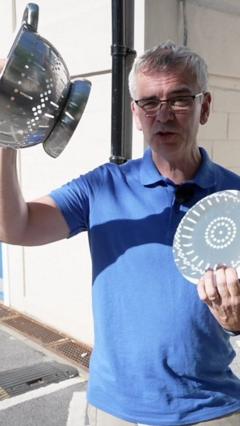
Village solar system model shows planets and stars

A village in Kent created a scale model of the solar system to help residents understand space and astronomy. This community-driven project makes science education accessible and engaging for all ages.

Why good news?

A community-driven initiative that democratizes science education. Makes complex astronomical concepts tangible and visual, enhancing learning accessibility. Shows how local communities can creatively advance scientific literacy.

Why it matters?

Public science engagement and education foster informed communities. Such initiatives can inspire younger generations toward STEM fields and create lasting interest in space exploration.

ScienceBBC Health· Jun 4, 11:29 PM

'World-first' vaccine designed by artificial intelligence

Cambridge scientists announced they have tested the first vaccine designed by artificial intelligence. This breakthrough has the potential to accelerate vaccine development and create more effective solutions against diseases.

Why good news?

AI-designed vaccines can significantly accelerate drug development and deliver more efficient solutions. This increases humanity's capacity to respond faster to future pandemics and diseases.

Why it matters?

This advancement in vaccine technology strengthens global health systems' preparedness and response capabilities against diseases.

ScienceBBC Science & Environment· Jun 9, 06:44 PM

Nasa reveals crew for Artemis III mission

NASA has announced the crew for the Artemis III mission, scheduled to launch in 2027. The mission aims to test systems ahead of a planned human Moon landing.

Why good news?

Represents concrete progress in humanity's return to the Moon; a significant milestone in space exploration and opens new opportunities for scientific discovery.

Why it matters?

Space exploration drives technological innovation, strengthens international cooperation, and deepens humanity's understanding of the universe.

ScienceBBC Science & Environment· Jun 9, 06:18 AM

UK's first Mars landing honoured with 13 plaques

UK's first Mars lander Beagle 2 reached the surface in 2003, but its success was only discovered in 2015. Thirteen memorial plaques have been placed to honour this achievement.

Why good news?

Recognition of a successful space mission and celebration of scientific achievement inspires STEM fields. Documenting past successes preserves scientific heritage and demonstrates perseverance in exploration.

Why it matters?

Mars exploration is crucial to humanity's advancement in space technology. Documenting achievements inspires future generations toward science and innovation.

ScienceBBC Science & Environment· Jun 8, 06:58 PM

Watch: Southern Lights timelapse filmed from space

NASA astronaut Jessica Meir captured a timelapse video of the Southern Lights (Aurora Australis) from space. This natural phenomenon demonstrates the visual interaction between Earth's magnetic field and solar wind.

Why good news?

Represents scientific curiosity and exploration spirit while showcasing universal beauty. Contributes to understanding Earth's natural phenomena and space research.

Why it matters?

Demonstrates the use of space technology for scientific observation, increases public interest in science, and raises awareness about atmospheric phenomena.

ScienceThe Conversation US· Jun 9, 12:17 PM

Bingles, knuckleballs and ‘Beer Barrel Polka’ – hundreds of forgotten works showcase the eclectic world of baseball scholarship

Hundreds of academic theses and dissertations about baseball conducted by university students have been compiled into a database. This collection reveals a rich scholarly resource from the pre-analytics era of baseball research.

Why good news?

Archiving and digitizing academic research preserves scholarly heritage and provides valuable resources for future researchers. Consolidating interdisciplinary knowledge in a digital database enhances educational and research quality.

Why it matters?

Systematic cataloging of academic work preserves scientific history and facilitates researcher access to past studies. Such projects contribute to digitizing cultural and intellectual heritage.

ScienceMIT News· Jun 8, 09:00 AM

MIT astronomers discover the earliest known flickering quasar

MIT astronomers discovered the earliest known flickering quasar, revealing a surprisingly mature black hole when the universe was only 850 million years old. This finding provides new insights into rapid black hole development in the early universe.

Why good news?

This discovery helps us understand how black holes developed so rapidly in the universe's earliest epochs. It deepens our fundamental scientific understanding and satisfies our curiosity about cosmic origins.

Why it matters?

Understanding the early universe forms the foundation of modern cosmology and physics. Such discoveries help refine our models of how the universe formed and evolved.

ScienceThe Guardian UK· Jun 8, 05:00 AM

Starwatch: Venus and Jupiter to shine side-by-side at dusk

Venus and Jupiter, the two brightest planets in our solar system, will appear side-by-side in the western sky this week after sunset. This rare alignment offers an excellent opportunity for stargazing and observing celestial phenomena.

Why good news?

Provides free, accessible stargazing opportunity for people interested in astronomy and nature. Encourages scientific curiosity and connection with the cosmos without requiring special equipment.

Why it matters?

Promotes scientific literacy, encourages outdoor observation of nature, and fosters wonder about the universe. Accessible to all regardless of background or resources.

ScienceThe Guardian UK· Jun 10, 09:40 AM

Humans prefer to walk anticlockwise, scientists find – but reason is unclear

Scientists have discovered that humans have a natural tendency to turn left and walk in an anticlockwise direction across multiple countries from Spain to Japan. The exact mechanism behind this left-turn bias remains unclear and is still being investigated.

Why good news?

This scientific discovery about fundamental human behavior mechanisms opens new avenues for understanding neurology and behavioral science. Such research contributes to illuminating previously unknown aspects of human physiology and cognition.

Why it matters?

Understanding natural human movement patterns could have practical applications in robotics, architecture, urban planning, and navigation systems design.

ScienceThe Conversation US· Jun 4, 12:25 PM

Fossil fishes buried in the desert reveal a missing chapter in marine history

Fossil fish discoveries from the period following the asteroid impact 66 million years ago reveal how marine life adapted during this critical extinction event. The complete skeleton of the oldest jack fish found at Qreiya 3 provides new insights into the evolutionary transition of ocean ecosystems.

Why good news?

This scientific discovery fills a significant gap in paleontology and enhances our understanding of Earth's life history. Fossil records now allow researchers to examine marine life recovery after mass extinction in unprecedented detail.

Why it matters?

Understanding how ancient marine ecosystems restructured themselves offers valuable lessons for contemporary climate change and biodiversity loss challenges.

ScienceMIT News· Jun 1, 03:00 PM

Enzymes that assemble into droplets can speed up cellular reactions

MIT biologists discovered that enzymes can assemble into concentrated droplets to accelerate cellular reactions. This finding reveals how cells organize enzymes and regulate growth signals more efficiently.

Why good news?

Understanding fundamental cellular mechanisms can unlock new possibilities for disease treatment and biotechnology applications. Controlling enzyme organization has revolutionary potential for drug development and synthetic biology.

Why it matters?

Better understanding of cellular function could advance treatment of cancer, metabolic diseases, and genetic disorders.

ScienceThe Conversation Global· Jun 1, 09:10 AM

Mysterious signals keep coming from space. We have found their ‘Rosetta stone’

Astronomers have identified the source of mysterious repeating radio signals from space: a binary star system spiraling around each other (ASKAP J1745). This discovery represents significant progress in understanding long-period transients that have puzzled scientists for years.

Why good news?

A scientific mystery has been solved. Better understanding of cosmic phenomena will enable more effective future observations and discoveries. This fundamental research deepens humanity's knowledge of the universe.

Why it matters?

Identifying the source of cosmic signals enhances our ability to predict and observe astronomical events. Such discoveries strengthen technological advancement and scientific methodology.

ScienceThe Conversation Global· Jun 2, 02:50 PM

Birds masturbate, and that’s perfectly normal

Scientists demonstrate that masturbation is a common and natural behavior across the animal kingdom, including birds. This finding could improve understanding and protection of natural behaviors in captive animals within animal welfare frameworks.

Why good news?

Better scientific understanding of animal behavior can lead to improved welfare standards in zoos and captive settings. Normalizing natural behaviors supports both physical and psychological health of animals in human care.

Why it matters?

Animal welfare is a cornerstone of ethical society. Supporting rather than restricting natural behaviors improves quality of life for animals in captivity.

ScienceThe Conversation US· Jun 1, 12:26 PM

Black teachers improve outcomes for all students, but the profession remains largely white

Research shows that Black teachers and educators of color improve academic outcomes, attendance, and engagement for all students, particularly those from similar backgrounds. However, teacher workforce diversity has remained largely stagnant over the past four decades.

Why good news?

Educational research demonstrates concrete benefits of diverse teaching staff. Teachers of color serve as role models, set high academic expectations, and teach material relevant to students' lives, leading to measurable improvements in test scores and engagement.

Why it matters?

Teacher diversity directly impacts educational equity and student outcomes. This research provides evidence-based justification for increasing diversity in education, benefiting entire school communities.

ScienceThe Conversation Global· May 28, 03:41 PM

Turtles finally have a place in the tree of life: X-ray study of South African fossils was a decider

Scientists have finally determined where turtles fit in the evolutionary tree of life using X-ray analysis of South African fossils. This breakthrough resolves a long-standing scientific debate about turtle origins and their relationship to other vertebrates.

Why good news?

Solving a long-standing scientific mystery represents genuine progress in evolutionary biology. Advanced technological methods (X-ray analysis) have proven effective in answering fundamental questions about life's history.

Why it matters?

Understanding turtle evolution clarifies the broader evolutionary history of vertebrates and deepens our scientific knowledge of life's development.

ScienceBBC Science & Environment· May 22, 11:42 PM

The space race to create gym equipment for future astronauts

Scientists are developing specialized exercise equipment designed for astronauts to use during future space missions. These innovations aim to help maintain astronauts' physical health during extended periods in space.

Why good news?

A crucial step forward for space exploration advancement. Protecting astronaut health enables longer and safer space missions. This innovative equipment development represents genuine scientific progress.

Why it matters?

Space technology advances are essential for reaching goals like the Moon and Mars. Astronaut health is fundamental to mission success.

ScienceBBC Science & Environment· May 28, 08:00 PM

BBC Inside Science

BBC Inside Science, broadcasting from Hay Festival 2026, highlights 2026 as a significant year for ocean research and scientific discovery. The program focuses on raising awareness about ocean ecosystems and their conservation.

Why good news?

Raising scientific awareness about oceans and their research contributes to environmental conservation and climate action. Broadcasting through a major platform increases public engagement with critical ocean-related issues.

Why it matters?

Oceans are critical for global climate systems, biodiversity, and human survival. Public engagement with scientific research encourages informed policy-making and behavioral change.

ScienceNASA News· Jun 11, 09:14 PM

NASA Award Boosts Space Technology Research Capabilities

NASA launched a new funding program to support space technology research at minority universities. The M-STAR initiative provides financial support for academic research and technology development aligned with NASA's exploration priorities.

Why good news?

Democratizing research opportunities enables a broader pool of scientists to contribute to space technology advancement. Targeted support for minority universities increases scientific diversity and innovation in the aerospace sector.

Why it matters?

Expanding equitable access to research funding helps develop future space technology leaders. Diverse perspectives are essential for the success of major space missions like Artemis.

ScienceNASA News· Jun 11, 04:21 PM

NASA’s Career Technical Education Day Highlights Technical Careers

NASA is promoting technical career education to maintain its global leadership in space exploration and innovation. The agency supports STEM engagement initiatives to cultivate skilled workforce in engineering, electronics, and other technical fields.

Why good news?

A proactive initiative to develop future technicians creates employment opportunities in science and technology while promoting STEM education to younger generations.

Why it matters?

Technical skill development is crucial for advancing space technology and offers young people valuable career pathways in high-demand fields.

ScienceNASA News· Jun 10, 02:00 PM

NASA Webb Finds Strongest Evidence Yet for ‘Black Hole Stars’

NASA's James Webb Space Telescope has made significant progress in understanding mysterious 'little red dots' discovered since 2022. Astronomers at University of Texas at Austin found strong evidence that these objects may be 'black hole stars,' solving a major cosmic puzzle.

Why good news?

Scientific advancement in understanding the universe's fundamental structure deepens humanity's cosmological knowledge. This discovery demonstrates the power of space telescopes and modern astronomy's capabilities.

Why it matters?

The existence of black hole stars could revolutionize our understanding of galaxy formation and the early universe. Such discoveries test fundamental physics laws and guide future research directions.

ScienceNASA News· Jun 10, 05:00 PM

NASA Equips Astronauts, Industry with Robotic Intelligence

NASA is equipping astronauts and industry partners with advanced robotic intelligence technology for lunar missions. This enables robots to handle routine tasks autonomously, freeing crew members to focus on scientific exploration and discovery.

Why good news?

Advancing robotic intelligence for space exploration increases mission efficiency and safety. Freeing astronauts from routine tasks enables them to focus on high-value scientific work, accelerating discovery and innovation in lunar research.

Why it matters?

This addresses critical technology needs for sustained human presence on the Moon. Advances in robotic decision-making and object recognition create essential infrastructure for future space exploration missions.

ScienceNASA News· Jun 10, 12:43 PM

GLOBE Mission Earth Educators Participate in Land Cover Community of Practice

NASA's GLOBE Mission Earth project brings together educators to refine how students interact with satellite land cover data through collaboration with NASA Langley Research Center. This initiative combines science education with environmental observation to prepare students for climate and Earth science research.

Why good news?

Empowers students with access to real NASA satellite data for authentic scientific research. Professional educator collaboration improves teaching quality and student engagement. Builds environmental and climate literacy in younger generations.

Why it matters?

Democratizes access to critical land cover data essential for environmental monitoring and climate research. Strengthens STEM education and prepares informed citizens for environmental challenges.

ScienceNASA News· Jun 10, 04:05 PM

Train Ride to NASA Kennedy for Artemis III Booster Segments

The final booster motor segments for NASA's SLS rocket destined for the Artemis III mission have been shipped from Utah to Kennedy Space Center in Florida. The eight segments are en route to support the assembly of the rocket that will carry astronauts to the Moon.

Why good news?

Represents tangible progress toward humanity's return to the Moon, marking a significant milestone in space exploration and advancing scientific discovery capabilities.

Why it matters?

The Artemis program drives technological advancement, international cooperation, and fulfills humanity's quest for space exploration and scientific knowledge.

ScienceNASA News· Jun 11, 08:41 PM

NASA’s Chandra Discovers Possible Supernova Remnant in Galactic Center

NASA's Chandra X-ray Observatory has discovered a possible supernova remnant in the galactic center. This finding contributes to understanding the expanding remains of exploded stars and the elements they distribute throughout the galaxy.

Why good news?

As fundamental science research, it deepens our understanding of the universe's structure and stellar life cycles. Studying supernova remnants helps us understand how cosmic elements are distributed and contribute to new star and planet formation.

Why it matters?

Understanding the universe's origin and structure is part of humanity's fundamental scientific curiosity. Such discoveries inspire science education and motivate advancement in space technology.

ScienceNASA News· Jun 11, 03:38 PM

NASA, USGS Scientists Go Rock Hounding in California’s High Desert

NASA and USGS geoscientists conducted field research in the Mojave Desert to investigate mineral signatures detected by satellite sensors. The presence of topaz could reveal important information about geological processes and potential water resources in the region.

Why good news?

The integration of satellite technology with ground-based research demonstrates advancing geological exploration methods. This approach can improve the efficient detection of natural resources like water sources and mineral deposits.

Why it matters?

Detecting water and mineral resources in desert regions is critical for resource management during climate change. The developed methods can be applied to other regions globally.

ScienceNPR Science· Jun 10, 08:41 AM

NASA names crew for Artemis III mission

NASA announced the four-astronaut crew for the Artemis III mission. The crew will orbit Earth and practice rendezvous techniques and other skills needed for lunar landing operations.

Why good news?

Represents a concrete step forward in humanity's return to the Moon. Demonstrates progress in scientific exploration and space technology advancement.

Why it matters?

Advances space exploration, drives technological innovation, and fosters international cooperation. Inspires future generations in STEM fields.

ScienceNPR News· Jun 11, 09:00 AM

How 'algorithm' got its name from a 9th-century Persian mathematician

A 9th-century Persian mathematician Muhammad ibn Musa al-Kharizmi solidified the concept of algorithms and popularized algebra and the use of zero. The word 'algorithm' itself derives from his name, becoming foundational to modern computer science.

Why good news?

Recognizing scientific heritage and cultural contributions to mathematics strengthens educational awareness. Highlighting the historical roots of mathematical progress and the Islamic Golden Age's contributions to science fosters cross-cultural understanding and appreciation of diverse intellectual traditions.

Why it matters?

Since algorithms are fundamental to modern technology, understanding their historical origins illuminates the evolution of mathematical thought. Recognizing contributions from different civilizations to scientific progress is crucial for a complete understanding of human intellectual development.

ScienceNPR Science· Jun 11, 08:15 PM

This week's Short Wave news roundup

NPR's Short Wave explores how air pollution impacts brain health, what ancient squirrel feces reveal about prehistoric animal life, and discoveries from a whale graveyard on the ocean floor. These scientific investigations advance our understanding of environmental and health connections.

Why good news?

Scientific research raises awareness about air pollution's health impacts and presents new discoveries in paleontology and ecology. Such investigations contribute to understanding and addressing environmental challenges.

Why it matters?

Understanding air pollution's effects on brain health can inform public health policies. Paleontological findings help us understand climate change and ecosystem shifts.

ScienceNPR Science· Jun 7, 09:00 AM

Bumblebees have tiny brains but they can solve problems like chimps and elephants

Researchers have discovered that bumblebees are capable of solving problems like animals with much larger brains, such as chimps and elephants. This finding suggests that even tiny brains can be incredibly resourceful and adaptable.

Why good news?

This is good news because it highlights the impressive cognitive abilities of bumblebees and challenges our assumptions about the relationship between brain size and intelligence.

Why it matters?

This discovery matters because it can help us better understand the complex social behaviors of bumblebees and inform strategies for conservation and environmental protection.

ScienceNPR Science· Jun 3, 08:43 PM

A science powerhouse bets on genetic therapy to beat brain disorders

A team of scientists with two decades of brain research expertise is pivoting toward gene therapy treatments for neurodegenerative diseases like Alzheimer's and Parkinson's. This research aims to develop novel therapeutic approaches for currently difficult-to-treat brain disorders.

Why good news?

Gene therapy represents a promising frontier for treating previously intractable brain diseases. An experienced research team applying decades of foundational knowledge to this therapeutic approach increases the likelihood of meaningful medical breakthroughs.

Why it matters?

Alzheimer's and Parkinson's affect millions globally and are prevalent in aging populations. Developing new therapeutic approaches could significantly improve quality of life for patients with these neurodegenerative conditions.

ScienceNASA News· Jun 8, 04:01 AM

Digging Back in Time in the UAE

NASA research highlights the geological and archaeological significance of Jabal al Fāyah in the UAE, revealing insights into early human adaptation to environmental changes. The site demonstrates how ancient humans survived in regions that transformed from shallow seas to deserts.

Why good news?

Scientific discovery advancing our understanding of human evolution and adaptation capacity. Demonstrates how ancient humans survived dramatic environmental transformations, offering insights relevant to understanding human resilience.

Why it matters?

Archaeological and geological research reveals human adaptation strategies to past climate shifts, enriching our understanding of human resilience and potentially informing contemporary environmental challenges.

ScienceNPR Science· Jun 3, 09:00 AM

We finally know enough about how the brain breaks to focus on fixing it, experts say

Scientists at the Allen Institute in Seattle report that they have accumulated sufficient knowledge about brain function to begin developing treatments for neurological disorders. This breakthrough marks a potential turning point in addressing brain diseases and injuries.

Why good news?

Establishing a scientific foundation for treating brain diseases represents concrete progress that could improve quality of life for millions. The transition from fundamental research to practical applications is a promising indicator of medical advancement.

Why it matters?

Neurological diseases like Alzheimer's, Parkinson's, and epilepsy affect millions globally. Understanding brain mechanisms could revolutionize treatment and prevention of these conditions.

ScienceNPR Science· Jun 7, 08:53 PM

Can birds outsing traffic? Some are trying

Hungarian researchers discovered that some urban birds are modifying their songs to compete with traffic noise. This adaptation demonstrates how birds are adjusting to changing environmental conditions.

Why good news?

Birds' ability to actively adapt to environmental changes demonstrates nature's resilience and evolutionary flexibility. This finding helps us understand how urban living affects animal behavior and adaptation mechanisms.

Why it matters?

Understanding how urbanization and noise pollution affect wildlife is crucial for developing more harmonious urban planning and conservation strategies.

ScienceNPR Science· Jun 4, 08:13 PM

Scientists probe how pigeons use magnetism to navigate

Scientists are investigating how pigeons detect and use Earth's magnetic field for navigation. Researchers propose that the liver may be the key organ responsible for sensing magnetic cues.

Why good news?

Understanding how animals navigate using magnetism represents genuine scientific progress in biology and physiology. This discovery deepens our knowledge of nature and could inspire technological innovations.

Why it matters?

Understanding magnetoreception mechanisms contributes to evolutionary biology and neuroscience. Such discoveries can inspire biomimetic applications and advance navigation technologies.